

The “Why”
In a Nutshell…
CONNECTION must always come first!
Creativity is for exploring, not performing.
Talking isn’t the only way, and that’s okay. Sometimes, it’s not what you say that is most important in the process. It’s what you DON’T (or can’t) say.
Therapy unfolds through curiosity, not pressure.
Honor your nervous system first.
Growth happens at the edges of what you can handle. Not beyond.
Regulation comes before insight.
ATTUNEMENT is key!
Play isn’t just for kids.
The goal isn’t perfection. It’s not to be “fixed.” It is finding harmony with what is.
It’s not necessarily making meaning out of a perceived “problem” or painful experience, it’s making meaning out of who we are now and how we more forward.
You are the expert on your own experience.
You are more than what you do or produce.
You are not your diagnosis!
EVERYONE has the capacity to be creative!
Therapy doesn’t have to be the formal, serious, and intimidating process it is. It can be playful, creative, and even fun!
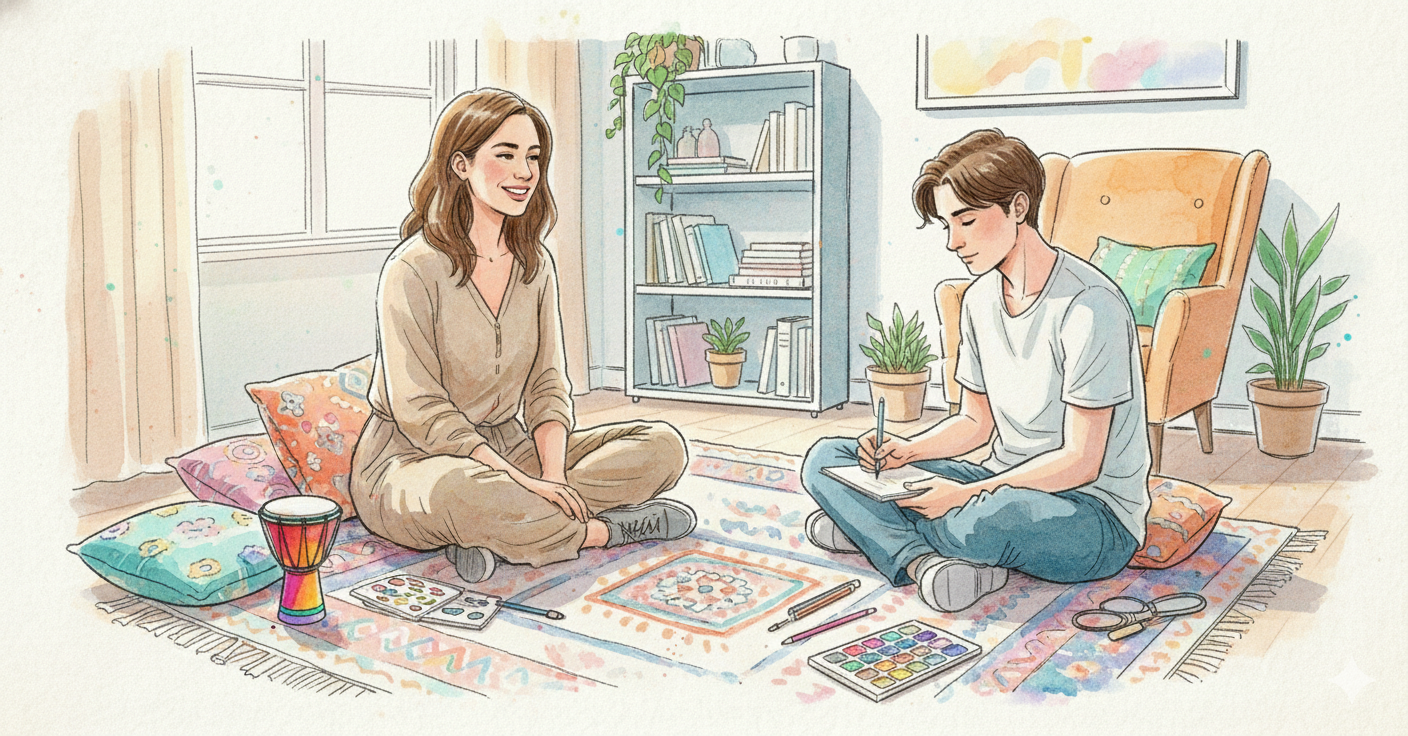
At Open Cadence Therapy, I believe therapy works best when it’s experiential, relational, and creative. People, especially children, teens, and creative minds, don’t just think their way to change; they feel, move, express, and connect their way to insight. My work blends evidence-informed methods with artistry, intuition, and flexibility, offering a space where growth is felt, not just discussed.
Core Principles
• Connection Comes First: Healing begins in relationship. I create a space where clients feel seen, heard, and understood, allowing them to explore safely.
• Experiential > Abstract: Play, art, music, and other forms of creative expression help clients access emotions and experiences that words alone can’t reach.
• Rhythm Over Perfection: Like music, therapy is about finding a personal cadence—not rushing, not forcing, but moving at a pace that fits each individual.
• Strength-Based and Human-Centered: Every client brings unique creativity, resilience, and insight. My role is to amplify those strengths while supporting growth in areas of challenge.
How We Work
Meeting Where You Are: Sessions are tailored to your developmental stage, personality, and needs—whether that’s play-based work for children, expressive art for teens, or relational exploration for families.
Experiential Engagement: Through synergetic play therapy, expressive arts, and creative interventions, clients explore feelings, practice regulation, and make meaning of their experiences.
Reflection and Integration: Experiences are connected to personal insight and life skills, helping clients translate therapeutic growth into daily life.
Collaboration and Transparency: Therapy is a partnership. I invite families and clients to participate in setting goals, evaluating progress, and co-creating the path forward.
I don’t believe therapy should be just talking, or about “fixing” what’s wrong. Growth happens when we engage the whole self—body, mind, and imagination. By blending expressive modalities with relational depth, clients gain tools, insight, and confidence that stick long after sessions end